
BARDSEY FIELDS
THE WILD GREEN HEART OF THE PARISH
Bardsey Fields is owned and managed by East Keswick Wildlife Trust.
In 2022 the Trust purchased and established the nature reserve, through generous private donations and grants from Bardsey Parish Council, East Keswick Wildlife Trust and the Emmerdale fund.
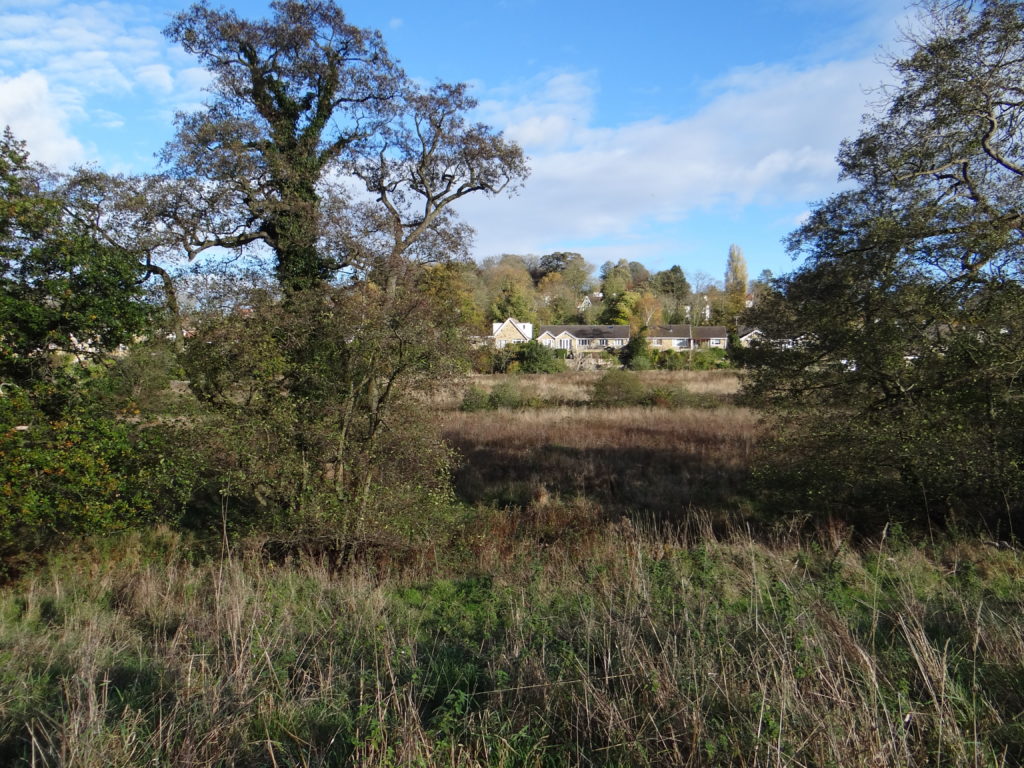
Bardsey Fields covers an area of 24 acres. The 12 acre field near to Bardsey Academy School was farmed as meadows for hay and pasture for grazing stock. The lower 12 acre fen through which the mill race and Bardsey beck flow, were not farmed or grazed due to the high water table, springs and flushes. Resulting in a very species rich wetland flora.
Our vision
In time, with our management, we hope the field will develop into a Wood Pasture. This is characterized by open-grown, often old trees in a grazed environment, representing a rich mosaic of habitats including grassland, trees, and scrub with messy edges. It is managed through grazing by our Dexter cows, to maintain its open structure producing a very rich and varied mosaic of habitats for wildlife. The Fenland in the valley floor will be sympathetically managed to enhance its rich biodiversity. It is one of last remaining semi intact fenlands in the Collingham Becks and River Wharfe catchments.
Natural flood management project 2024/25
In July 2024, EKWT met representatives from Yorkshire Water and The Yorkshire Dales Rivers Trust, who were overseeing the Natural Flood Management project along with EKWT at Bardsey Fields.
Originally, two drain pipes took the surface water from Bardsey School’s roofs, playgrounds and car park under Bardsey Fields Nature Reserve into the mill tale below. (The water that flows from a millwheel after turning it, or the channel in which the water flows.) With permission and funding from Yorkshire Water these two drain pipes have been broken and the water diverted up on to the surface of the field. This will make the upper part of the field wetter. By providing a more natural pathway for the water this will reduce the flow of water into the beck, improve water quality and help alleviate flooding downstream. For more information about this work, go to Projects – Natural Flood Management.
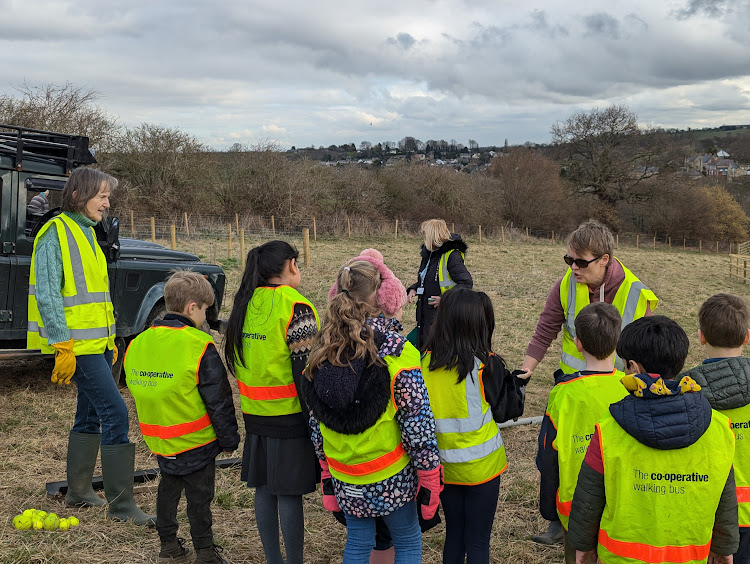
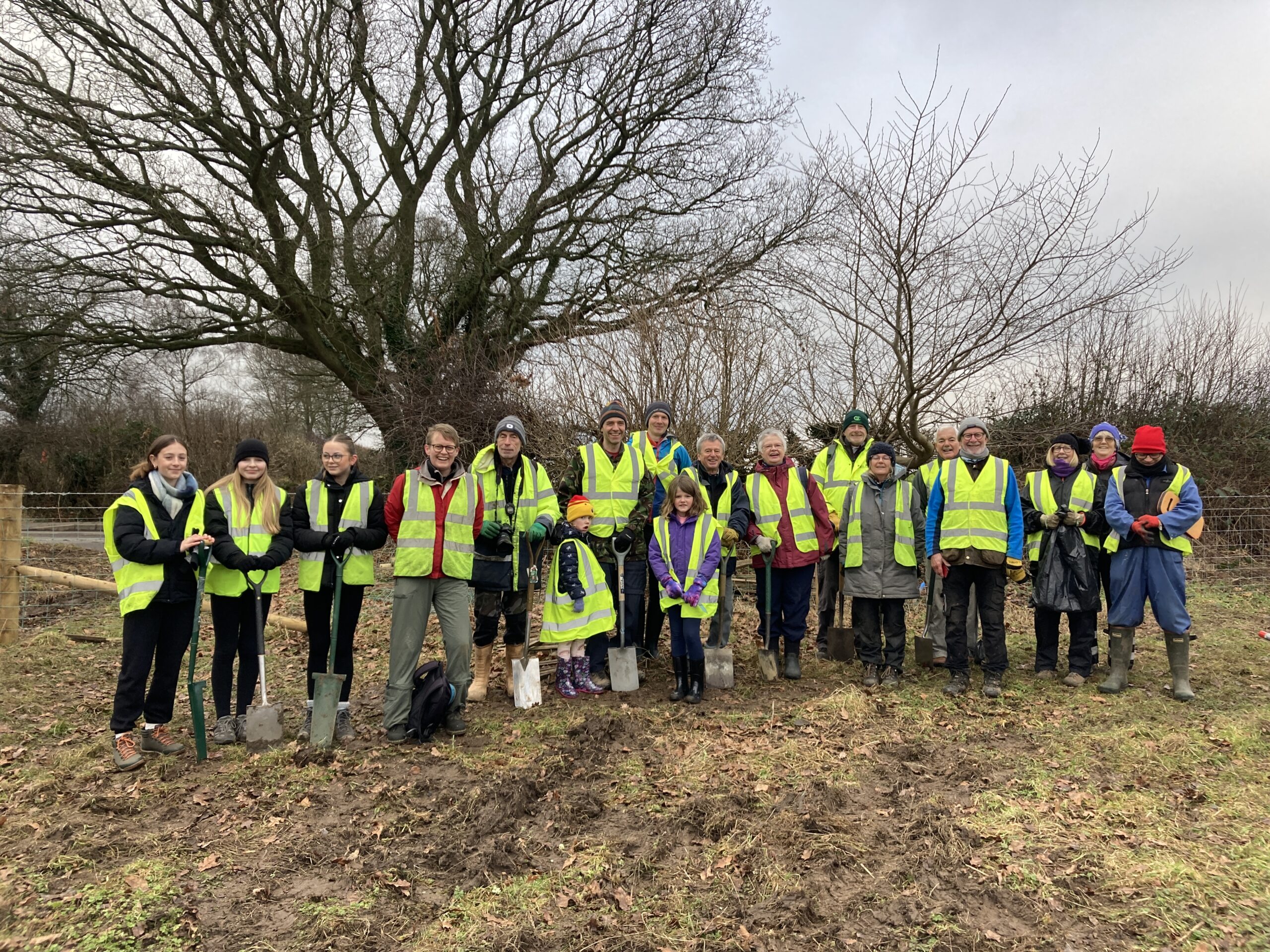
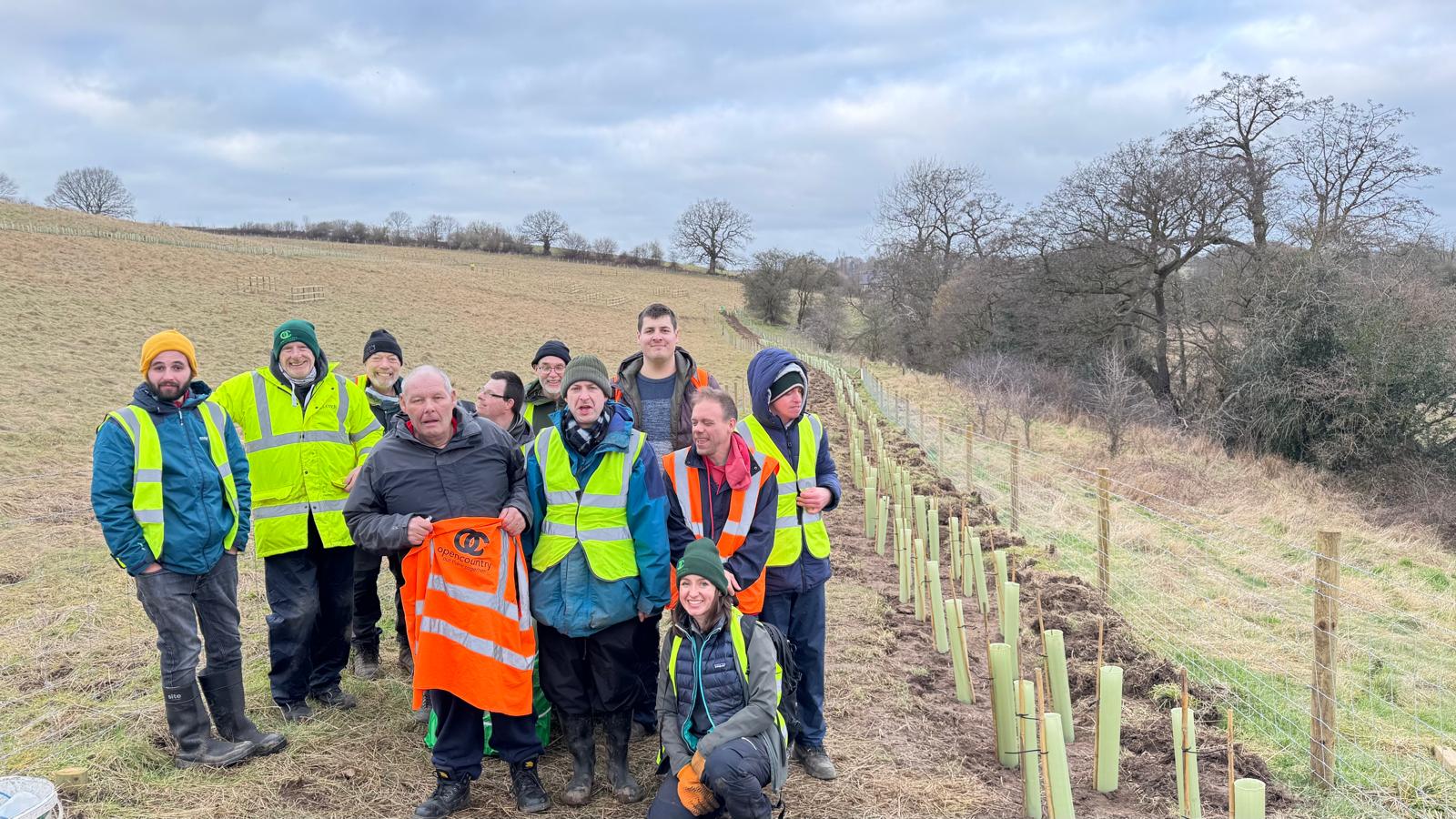
The grant from Yorkshire Water and NFM project provided funding for hedge planting and woodland creation. Over 3,000 mixed native tree and hedgerow plants of 27 different species were planted. These included 9 small copses, 2 hedgerows and 3 woodland copses planted by EKWT volunteers, Bardsey school children and Open Country.
Flora and Fauna of Bardsey Fields
The fields are locally and regionally important as over 99% of these types of flower rich pastures have been lost to intensive agricultural practices. They are home to many species of plants and animals that are under threat from habitat loss.
Bird Species
We have recorded over 30 species of birds nesting, including many rapidly declining farmland species. A nesting buzzard was recorded which is quite amazing in the heart of the village. During the summer, the songs of summer migrant warblers such as the whitethroat and lesser whitethroat, chiffchaff and blackcap could be heard from the bramble scrub and meadows.
Butterfly species
Over 20 butterfly species were recorded in 2024, many of which breed on the site. The land holds the only colony of Common Blue butterflies in the local area, having disappeared from all other surrounding parishes due to habitat loss. Moth species have not been recorded, however the day flying Chimney Sweeper has been recorded in large numbers along with day flying burnet moths in the grasslands. Both of these species are indicators of good habitat and unimproved grassland where they breed.
Carbon storage
Bardsey Fields is one of the most important sites for carbon storage in the parish consisting of lowland fen, lowland wet grassland and unimproved pastures which can store as much, if not more, carbon underground than woodland.
Wildlife corridor
The fields form an important wildlife corridor connecting the whole Bardsey Beck catchment and adjacent valleys. Roe deer breed here, three were seen on a recent site visit by the Trustees of East Keswick Wildlife Trust, while during the summer bats were recorded using the site as a wildlife corridor between the two adjacent valleys.
Small mammal survey
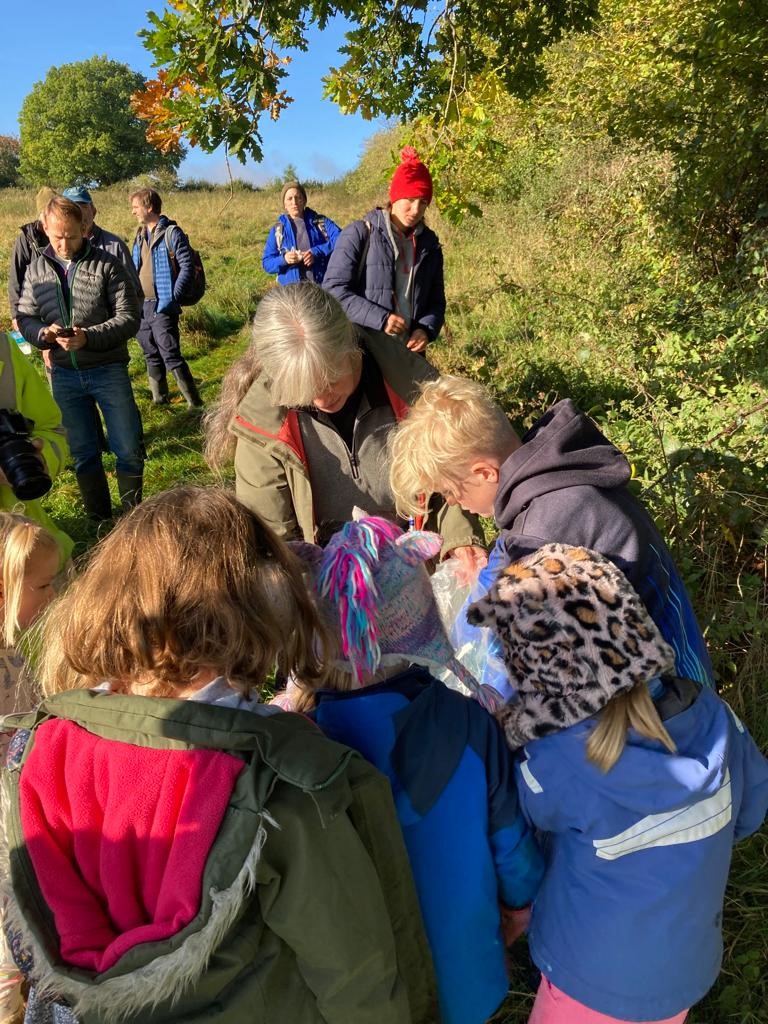
In October 2024 Ann and Robert from the Yorkshire Mammal Group visited the site to survey Bardsey Fields. With their expert guidance, over 40 adults and children laid humane traps, ensuring that any mammals caught had plenty of food and a cosy bed for the night. The following morning, despite it being cold and damp, 50 adults and children came to see what had been found.
The traps were emptied, the mammals weighed and recorded and then safely released. The children were so excited to locate the traps they had laid the night before and to see what was inside. 50 traps were laid and 20 wood mice, 6 bank voles and 1 common shrew were recorded, giving the Trust a baseline for the species of small mammals living on this reserve.
Seed collecting
During August and September 2024 a group of volunteers collected a wide variety of wildflower sees from all Trust nature reserves. All wildflower and tree seeds are collected within a five mile radius of the village to keep the gene pool of seeds local.
The reason for collecting the seeds is to increase biodiversity on the reserves. Different native wild flowers, trees and shrubs support a wide range of mammals, plants and micro-organisms and are necessary for healthy ecosystems. For example, dandelions support more than 50 species of insects, birdsfoot trefoil over 130 and oak trees more than 2,300.
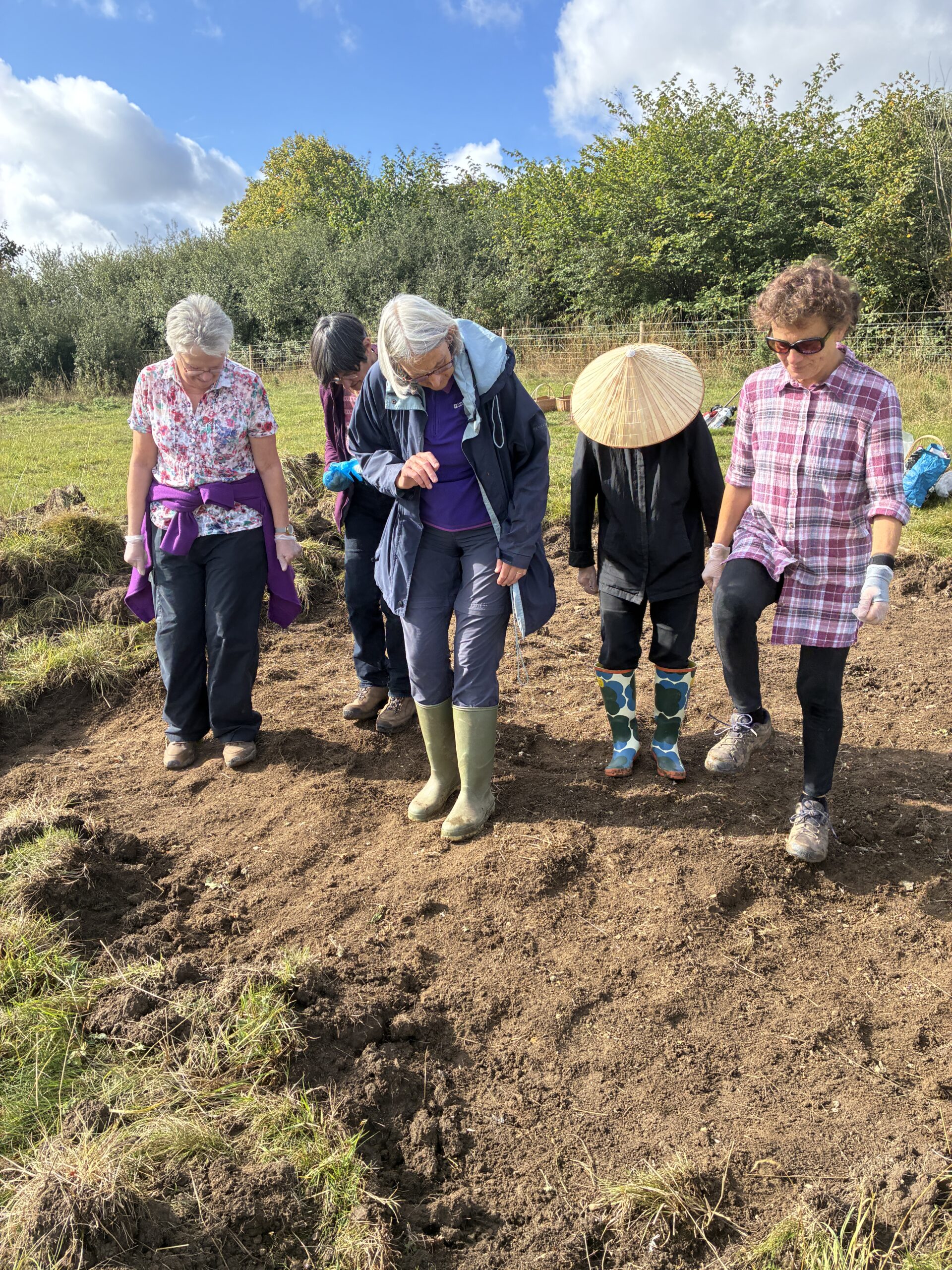
Seeds collected and propagated have been planted in Bardsey Fields, now that grazing, cutting and scarifying has removed the dense grass sward. This enables wildflower seeds and plug plants to become established.